A Bible plan for what you're going through.
An iPhone, iPad and Apple Watch app that gives each person a short Bible plan for what they are living, with three real things to do each day. Product, brand, AI features, app and website, designed and built by me.
The call
Nothing in the app measures your faith.
Habit apps usually reward streaks and punish gaps. For prayer, that turns into guilt, or into people leaving a timer running to protect a number. So skipping prayer gives the same progress as doing it, progress only looks back and never goes down, and there are no leaderboards. The same line runs through the AI: it helps you understand today's passage and take today's step. It is not a pastor, a counselor or your church, and it says so.
The situation
I kept finishing Bible reading plans and nothing in my week changed. Plenty of apps help people read. YouVersion, Glorify, Hallow and Abide are libraries: read, listen, meditate, often across 30 days or more, with streaks that punish a missed day. People drop off early. Faithlify is the step after reading: "Be doers of the word, and not hearers only" (James 1:22).
The mechanics came from apps like Duolingo and games like Candy Crush, not from devotionals: small, clear goals you can finish today, and a reason to come back tomorrow. Without the guilt those apps use to keep you there.
What I built
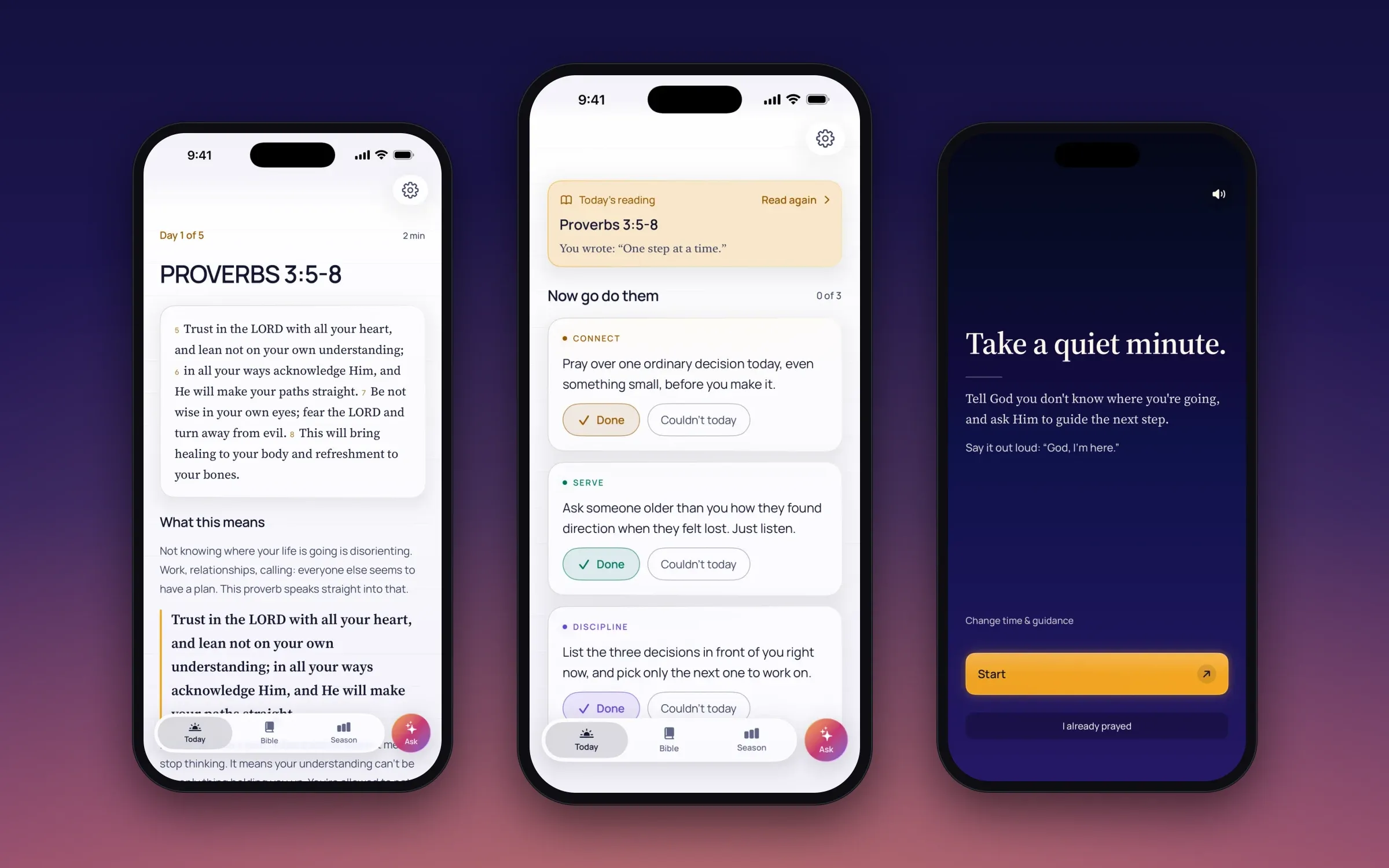
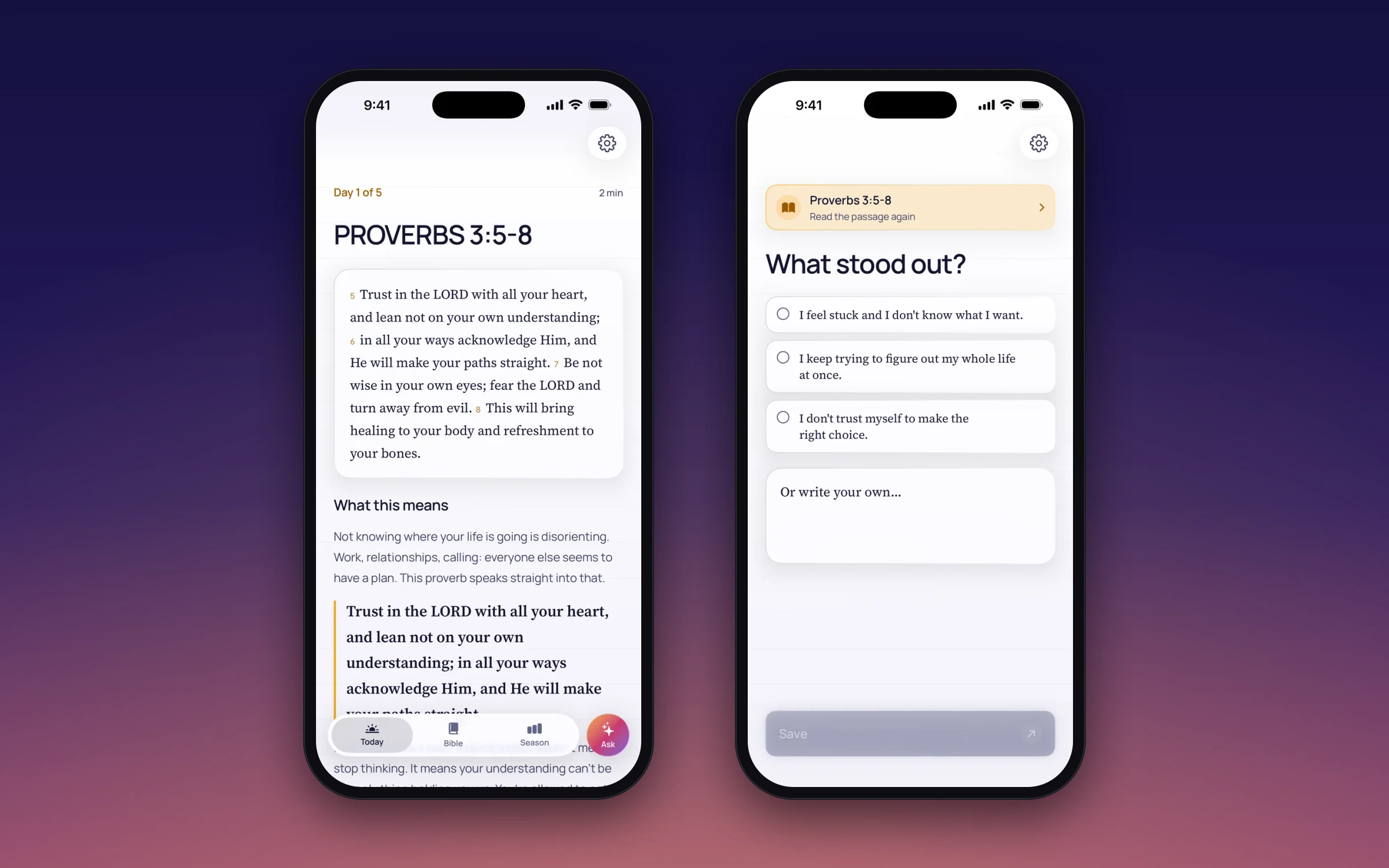
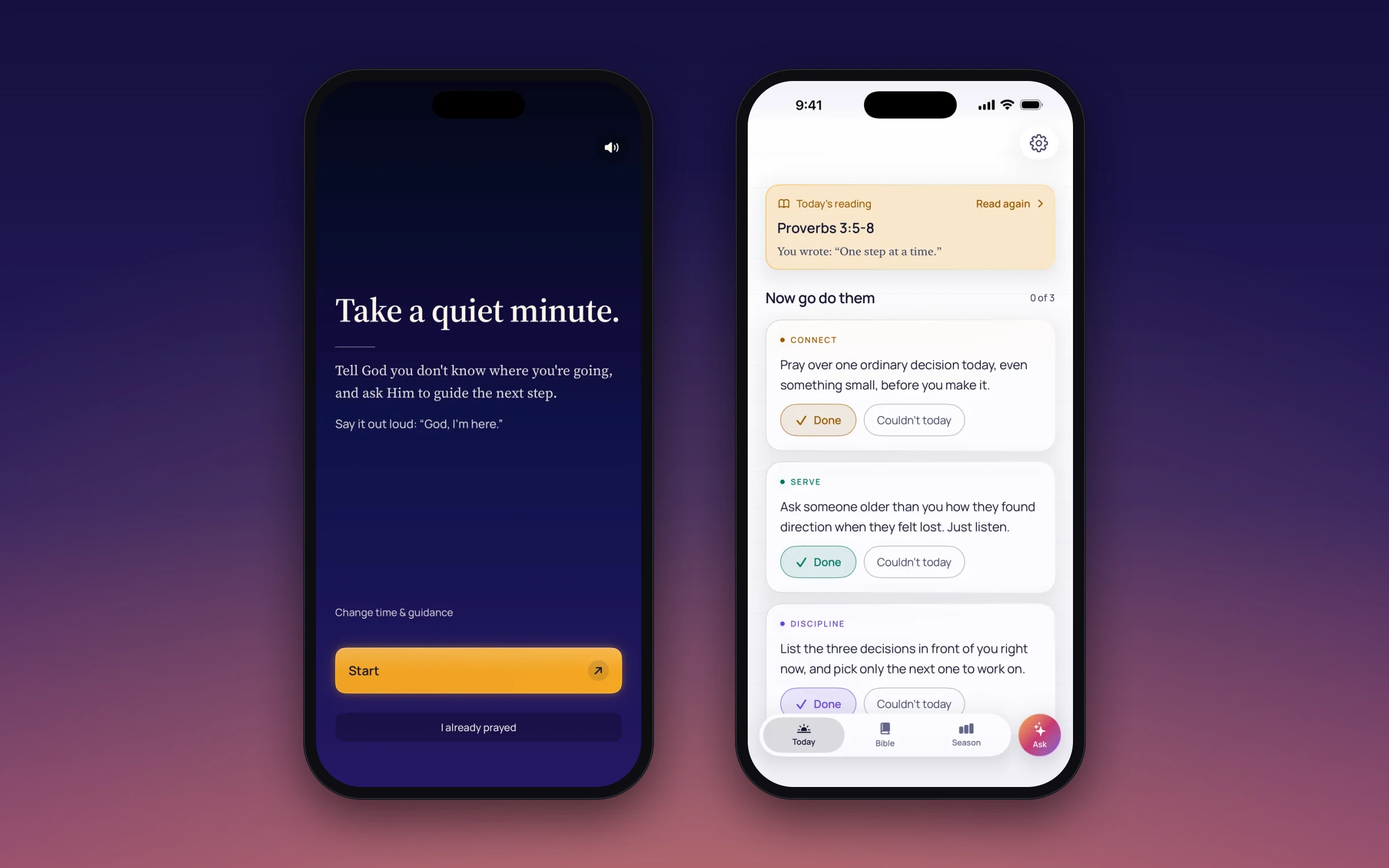
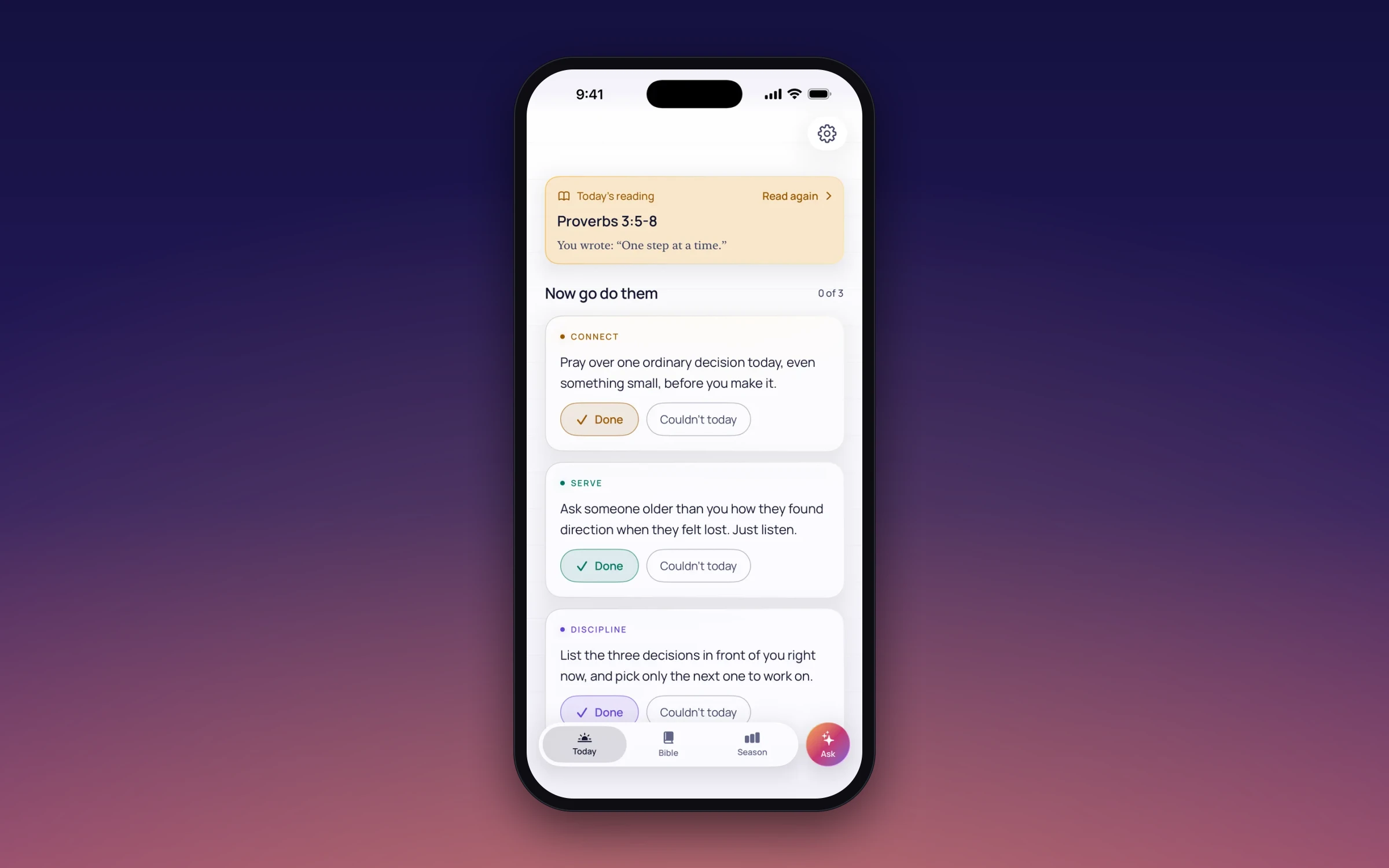
A daily rhythm of a few minutes, the same every day so there is nothing to figure out. Read a short passage from the Berean Standard Bible, with a plain explanation of what it changes today. Reflect in one honest line, or start from one of three suggestions. Pray in a quiet moment, with guidance if you want it. Do three concrete actions: one toward God, one for someone else, one for you.
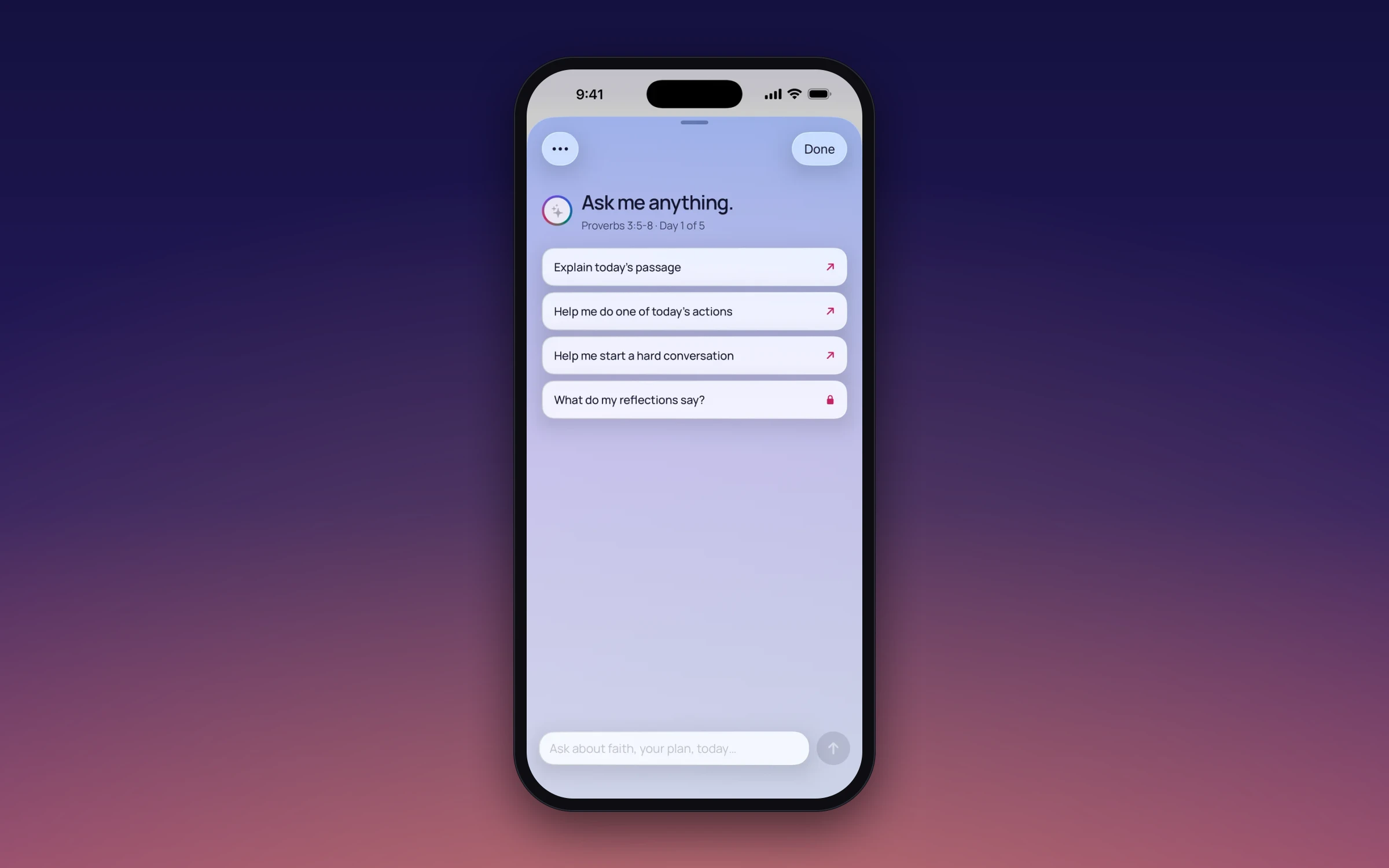
More than 30 plans run 3 to 10 days, for real situations: anxiety, grief, conflict, a new direction, doubts, starting over, and heavier seasons including addiction. Reviewed plans are free and work offline. When none fits, someone describes what they are living in their own words and the app builds a short plan for it. Ask helps with today's passage and today's actions.
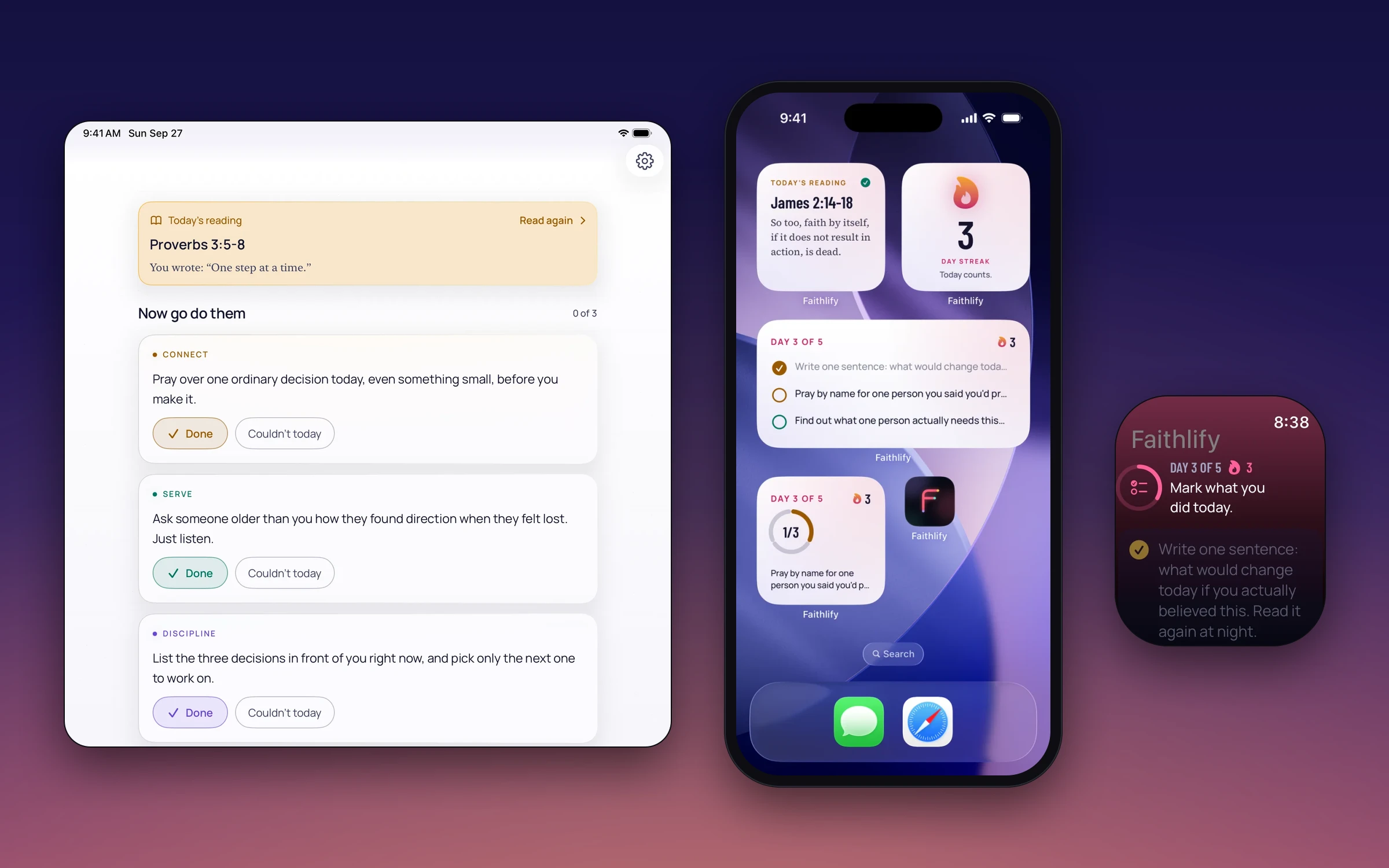
It is a native iOS app in SwiftUI and Swift 6, with iPad, Apple Watch and Home Screen widgets, a Supabase backend, optional Apple and Google sign-in, and the full Bible offline with search by reference. The core logic runs under 211 automated tests. I design and build it alone, working with AI coding agents.
Decisions that shape it
Scripture is never generated. Custom plans and Ask use a language model from an external provider, with guardrails. Every verse is resolved from the Bible text stored on the phone, never written by the model, and the iPhone validates each plan again before showing it. Ask says it can be wrong and does not replace a pastor, a community or professional help.
Private by default. Without an account, the journal never leaves the phone. Signing in only syncs across your own devices, and no church leader or anyone else can see it. What someone writes for a custom plan is not stored word for word. No ads, no selling data.
Safety before engagement. If what someone writes signals a crisis, the app stops and shows where to get help right away.
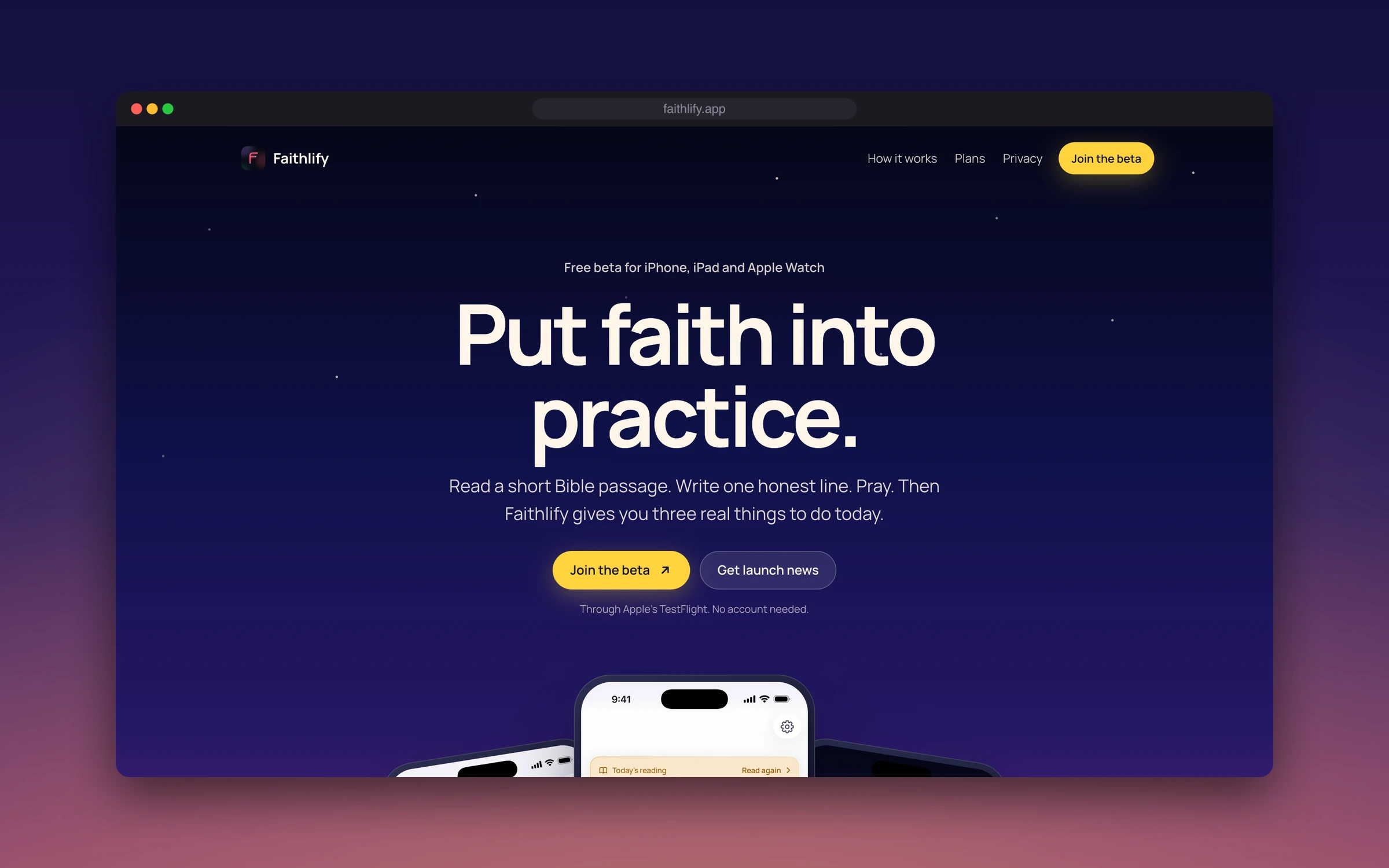
One brand, end to end. The app, the website at faithlify.app and the social launch kit share one identity and one voice, so the promise on the first post is the same one the app keeps.
Five weeks, 214 commits
From the first commit on August 25 to build 13 on September 29: 214 commits and thirteen TestFlight builds. The speed is not the point. The loop is. Beta feedback turns into builds within days. The first round brought 3-day plans for people who wanted a shorter start, and took the word "AI" off every screen, so the app says what it does instead of what it uses. Then feedback moved inside the app itself: "Send feedback" in Settings and a short "How was it?" at the end of every plan.
The last change before this page was written is the one I care about most. When someone describes a painful season, their plan is built from what they actually wrote, and it never repeats the wound back to them.
Where it stands
On the App Store since October 22, 2026, on iPhone, iPad and Apple Watch. It is free, with an optional subscription, Faithlify Plus, for plans written for the person. Version 1.0 went live two days after it was sent to Apple, and the external beta closed a week later.
It is still early: no paid subscriptions and no reviews yet, and I will not pretend otherwise. The problem I am working on now is the first day. Most people who start a plan do not finish reading it, so the work has moved from adding features to making that first day easier to finish. The app measures return on days 1, 7 and 14, without reading a word anyone writes.
Logbook
How it got here
Scroll to move through the steps. Where there is a before and after, drag the handle to compare.
The idea
Plans finished. Weeks unchanged.
I kept finishing Bible reading plans and nothing in my week changed. The mechanics came from apps like Duolingo and games like Candy Crush: small goals you can finish today.
01 / 08Read, do, pray. The app, from a beta build.