Less guessing. More playing.
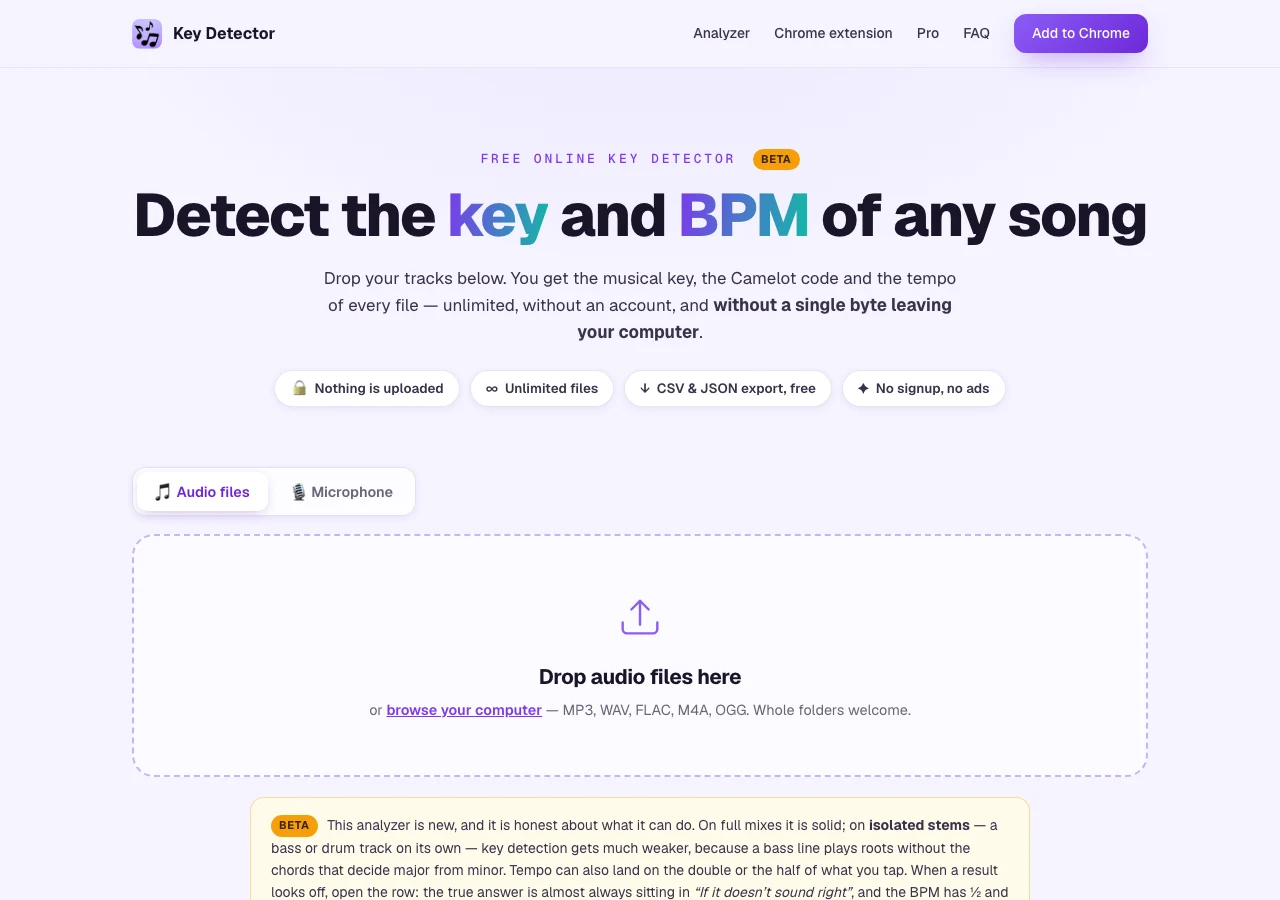
A Chrome extension and a free web analyzer that tell musicians a song's key and tempo, then let them practice in a key that suits them.
The call
Give the web analyzer away. Charge for the extension.
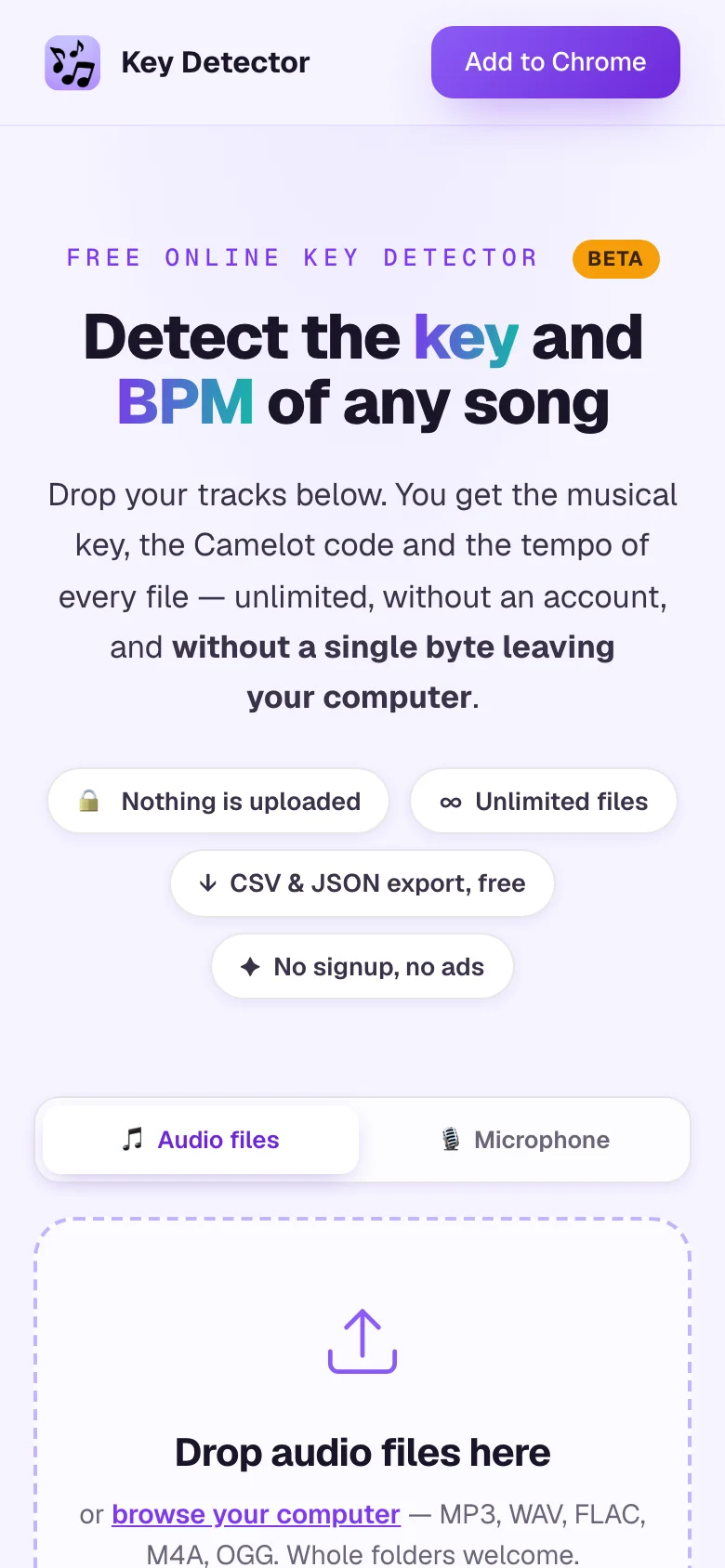
Two products, two tiers, on purpose. The web analyzer is free and unlimited, no account, so it can bring musicians in through search. The extension is where regular practice happens, and that is where Pro lives. The tension is real. A free tool next to a paid one invites the question "why pay?". The answer is real-time transposition on YouTube, and the numbers so far say it holds.
The situation
You are learning a song. You want its key and tempo, and you would rather not open a recording session or trust your ear on a bad day. The existing tools work, but they are a detour. I wanted the answer to live where the music is already playing: in the browser tab.
What I built
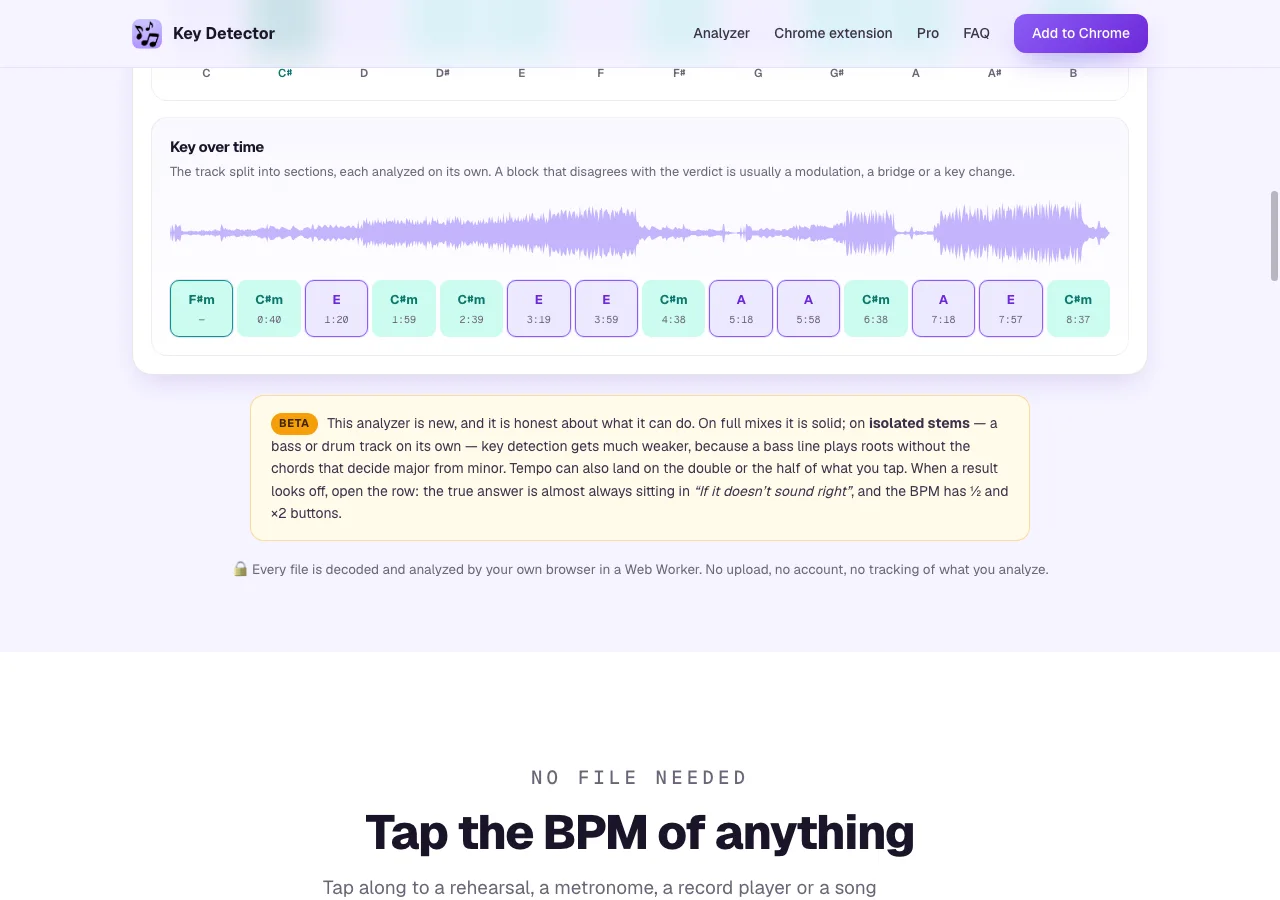
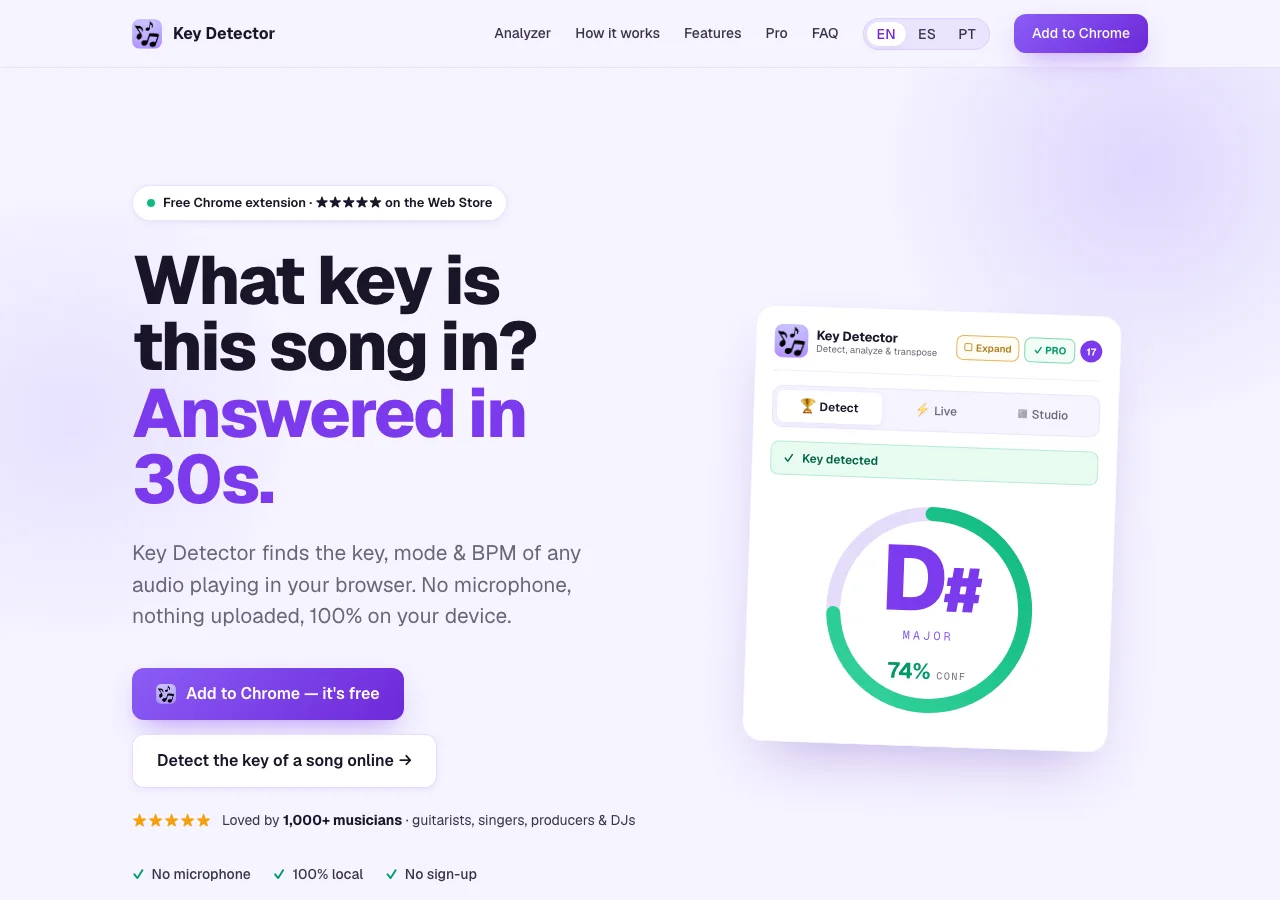
The Chrome extension listens to the audio in a tab, no microphone, and runs the analysis on the device. It shows the key on an interactive piano and, in Studio Mode, transposes YouTube in real time so a singer or a guitarist can practice in a key that fits. The website carries a free analyzer for audio files with the same engine underneath.
That engine is my own: a chromagram with Krumhansl-Schmuckler correlation for the key, spectral flux for the tempo, and a radix-2 FFT running in a Web Worker. Tested against eleven of my own tracks with known keys, it got eight right on key and eight on tempo. The other three are why the interface shows a confidence figure rather than a verdict.
Around the engine I designed the brand, wrote the site in English, Spanish and Brazilian Portuguese, set the pricing, and answer the support email. I built it as a solo founder with an AI engineering assistant, and I document each version: what worked, what did not, and why.
Listening to the people who pay
In August a Pro user wrote that the transposed key was sometimes unreadable. My first diagnosis was wrong. I assumed a missing feature. It turned out to be an initialization bug hiding behind a silent catch. The lesson went straight into the project notes: reproduce first, promise second.
Where it stands
Live, growing, and paying for itself in a modest way. AI assistants already send almost five percent of new visitors, which changes how the site should be written. Next up: instrumenting the funnel without touching the privacy promise, and finishing the free trial flow before the price is touched again.
A closer look
Swipe or drag to explore. Use the arrows to move between views.